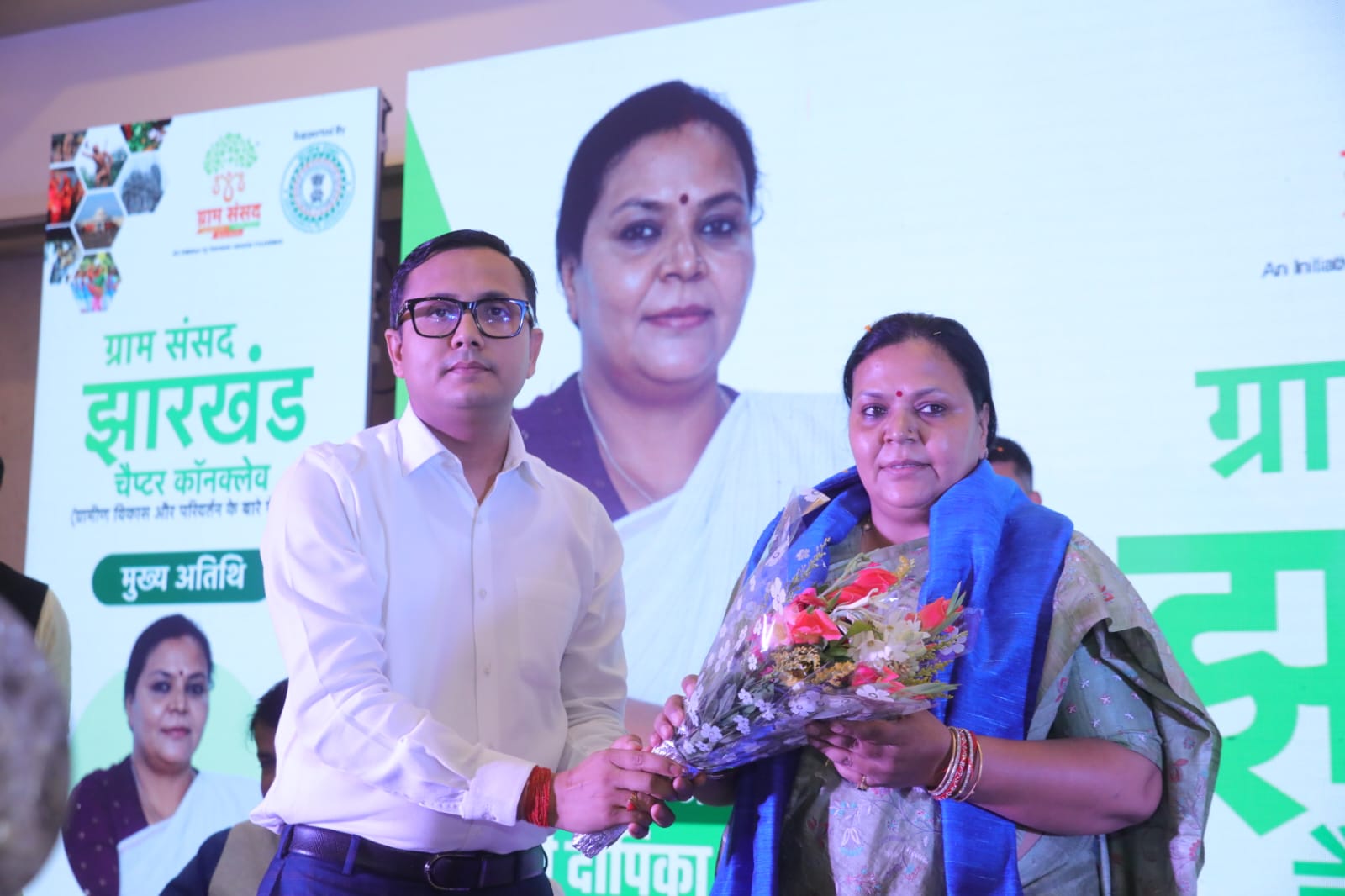
Brajesha Sharma is the Founder and CEO of Gram Sansad, an award-winning social innovation platform redefining rural governance in India through participatory, evidence-based, and scalable forms of local self-governance. An engineering graduate who became a social entrepreneur, Brajesha has developed into a leading advocate for rural development, locally governed decentralization, and empowerment of grassroots communities. Confident in his belief that India’s villages can be centres of inclusive growth, he brought Gram Sansad – a project of the Random Variable Foundation – into a national initiative of community engagement that fosters the strengthening of Panchayati Raj Institutions (PRIs) and builds resilient, empowered, and self-reliant rural communities. Under his leadership, Gram Sansad has impacted over 2,200 Gram Panchayats in five Indian states, providing rural local governance institutions and communities with capacity building, evidence-based micro-planning, participatory budgeting and resource allocation, market linkages, and digital governance resources.

At the heart of his mission is gender inclusion and empowerment of women. Brajesha understands the vital role of women in rural transformation. He has set in motion a comprehensive program of leadership development for elected women representatives, empowered SHG federations, and built women led livelihood enterprises, enabling thousands of rural women to transition from the periphery of governance and economic decision-making to being part of the mainstream of their communities. He has transformed Gram Panchayats into gender-responsive governance structures where women are included in policy decisions at the most basic level.

रक्षा मंत्री श्री राजनाथ सिंह ने आतंकवाद को राज्य की नीति के रूप में अपनाने वाले देशों को अलग-थलग करने का आह्वान किया

Brajesha’s dedication and passion to participatory democracy and local development is evident within his work. His work on the ground includes, but is not limited to, educating Panchayat leaders on sustainability models for revenue generation, advocating for Own Source Revenue (OSR) strategies for independence, and framing Localized Sustainable Development Goals (LSDGs) into Panchayat plans and activity. With the additional innovation of marrying that with data-driven governance, agrigov, and ICT based monitoring systems – Gram Sansad produces transparent, accountable, and future-ready rural governance. These change and innovation create equitable access to services such as education, health, water, and sanitation, as well as sustainable livelihoods to counter migration, and consequently build the rural economy.

His achievements in the public policy and advocacy domain have been recognized with the highest honors from various government and civil society institutions and organizations. Brajesha has received awards from Vice President of India, Government of Bihar, and other prominent leaders, such as Shri J.P. Nadda, in recognition of his phenomenal achievements in strengthening Panchayati Raj and facilitating rural development. His models have inspired and significantly impacted policy interventions at the state level, and they continue to be implemented as replicable best practices within decentralized governance. In addition to implementation, Brajesha also works as a leading thinker and policy influencer where he interacts frequently with government, civil society, academic institutions and international development organizations to promote and advocate for an inclusive, participatory, and sustainable rural transformation. His research-influenced practice connects indigenous knowledge with modern scientific approaches, and he works to ensure the development models he implements are technically sound and also culturally relevant, and grounded in communities.

Brajesha Sharma has shown through Gram Sansad that empowered Panchayats can be the foundation of a robust, equitable and resilient India. His aim is to help create a nationwide movement of democratic deepening where rural communities collectively take responsibility for their autonomy with dignity, generate their own resources and exercise their democracys through well-informed and collective decision-making. All while promoting bottom-up governance, diversity in gender representation, and local sustainability, Brajesha is inspiring the next generation of changemakers and policymakers who will build a more self-reliant rural India. As we write this today, he is a systemic change agent, an advocate for women’s leadership, and a relentless advocate for grassroots democracy, positively shifting not only village life but the larger discourse of rural development in the largest democracy in the world.

Throughout his public life, Shri Brajesha Sharma has consistently emphasized the importance of “credibility” and integrity in leadership. In his many speeches and engagements, he advocates for transparent governance, accountability, and the empowerment of rural communities to ensure lasting development..

A firm believer in the greatness of India’s cultural heritage, Shri Brajesha Sharma has always motivated the youth to take pride in their roots while actively contributing to rural development and nation-buildingin their roots while actively contributing to rural development, sustainable governance, and nation-building through grassroots empowermentThroughout his public life, Shri Brajesha Sharma has consistently emphasized the importance of “credibility” and integrity in leadership. In his many speeches and engagements, he advocates for transparent governance, inclusive decision-making, and empowering local communities to take charge of their own development.

Shri Brajesha Sharma firmly believes that debates, deliberations, consensus, and cooperation are the foundation of a thriving democracy. As a dedicated social leader, he has consistently championed meaningful dialogue and collaborative decision-making, ensuring that diverse voices from grassroots to policymakers actively contribute to inclusive nation-building.

Another cause close to Shri Brajesha Sharma’s heart is the empowerment of women. He has been a strong advocate for increasing women’s participation in governance and public life, supporting initiatives that promote education, entrepreneurship, and leadership among women—especially in rural and underserved regions..

He has consistently promoted policies and programmes that aim to uplift marginalized sections of society, with a special focus on the youth, women, and rural communities. Through his unwavering dedication and grassroots-oriented approach, Shri Brajesha Sharma has earned widespread respect as a visionary leader committed to progressive, inclusive, and people-centric governance.

A former engineer turned social entrepreneur, he has impacted over 2,200 panchayats across five states by promoting Localized Sustainable Development Goals (LSDGs), Own Source Revenue (OSR), and grassroots leadership. Under the Random Variable Foundation, Gram Sansad bridges community wisdom with policy, enabling evidence-based rural development. Brajesha collaborates with governments and civil society to institutionalize bottom-up governance. Recognized by national leaders, his mission is to shape Gram Sansad into a national platform for self-reliant panchayats leading with dignity, sustainability, and local innovation.

Under Brajesha’s leadership, Gram Sansad has empowered over 2,200 panchayats across five Indian states—Bihar, Rajasthan, Jharkhand, Karnataka, and Maharashtra.

As a champion of women’s empowerment at the grassroots level, Shri Brajesha Sharma has spearheaded initiatives to increase women’s participation in local governance and rural leadership. Under his guidance, Gram Sansad has facilitated capacity-building programs for women representatives, supported women-led self-help groups, and promoted inclusive planning processes that ensure women’s voices are central to community development.

Brajesha Sharma is a prominent Indian social entrepreneur and governance reformer, best known as the Founder & CEO of Gram Sansad. He is widely recognized for his articulate voice, effective leadership, and his role in strengthening grassroots democracy through panchayat empowerment. With a vision rooted in inclusive development, he actively engages with policymakers, institutions, and rural communities to co-create sustainable, evidence-based solutions for India’s rural transformation.

Subscribe for

Newsletter